Product investigation / 2025
Braun M60
Reverse Engineering
I took a pocket shaver apart to understand the decisions hidden inside it: 44 component instances, their materials and manufacturing routes, and the lifecycle cost of putting them together.

01 / Object anatomy
One product.
Every decision exposed.
I disassembled the M60 to its smallest serviceable elements, weighed and numbered each part, then grouped the system into housing, power, transmission and cutting functions. The teardown turned an opaque consumer object into an auditable bill of materials.
02 / Evidence log
Disassembly as a way of reading.
Fasteners, snap fits, mould marks and wear traces revealed how the product was assembled, where it was designed to flex, and which parts were intended to be replaced rather than repaired.
03 / Material + process ledger
The bill of materials became a manufacturing map.
Visual inspection, technician input, flame testing and CES EduPack were combined to avoid treating material identification as guesswork. Each selection was tied back to the performance the part needed and the process that made its geometry economical.
04 / Lifecycle audit
The impact sits upstream.
Granta Eco Audit showed that material production and transport dominate the first life. Use energy is almost negligible, so a credible redesign has to change material choice, mass and recovery rather than optimise the switch or battery runtime.
Largest material burden
68.6% The motor’s share of material-phase embodied energy.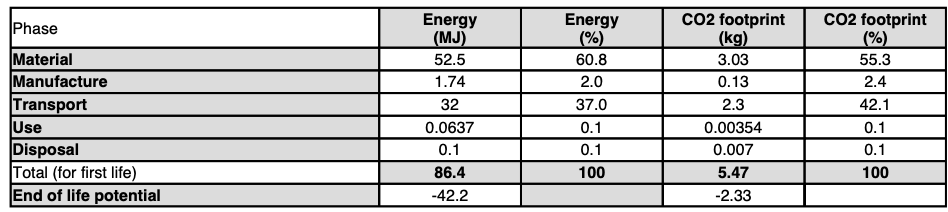
05 / Redesign direction
A premium redesign, with the trade-off left visible.
The client brief asked for a more industrial and premium product. Ashby screening led to aluminium for the housing and titanium for the blade set, with die casting proposed for production. The result improves tactility, corrosion resistance and recovery potential, but does not pretend that premium metals arrive for free.
Injection moulded, light, economical and visually translucent.
Die cast for a stiffer, corrosion-resistant and more premium shell.
Hard, manufacturable and proven for the shaving interface.
Lower density, high corrosion resistance and stronger premium signal.
Embodied energy
End-of-life recovery potential
Reflection
Reverse engineering taught me to read a product as a chain of connected choices: form implies process, process implies material, and material carries a cost long before the user turns the product on.Return to project archive