Multi-Functional Pet Cleaning Tool Design
PetEase
& Dooti.
Less friction.
More room for care.
From the everyday work of animal carers to a modular cleaning concept and a working bag-making prototype.
 02 / Team development
01 / Shared research
Care is personal.
The work is repetitive.
Our team investigated cleaning, waste handling and grooming across shelters, foster homes and pet-owning households. Repeated setup, awkward cleanup and tool switching turned small tasks into a substantial daily workload.
Too many transitions.
Changing tools, finding attachments and cleaning up between tasks interrupts the care routine.
Hygiene needs an easy reset.
Collected fur and dirty contact surfaces make maintenance part of the product experience.
Waste care extends beyond pickup.
Containment, carrying and disposal create a wider system to design around.
Shared research and synthesis / Phase 1, pp. 2–10. These insights informed four individual concept directions.
02 / My individual concept
PetEase.
One handle.
A more continuous routine.
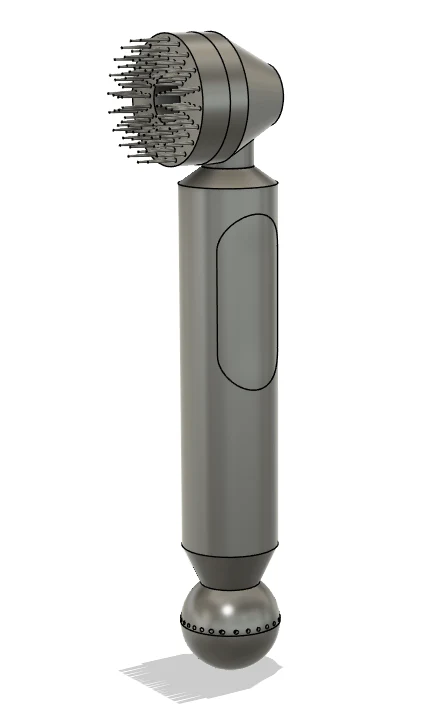
I focused on the friction of switching between tools. PetEase combines interchangeable upper heads, loose-fur collection and a passive lower filter in a dual-ended handheld concept.
Choose a useful combination.
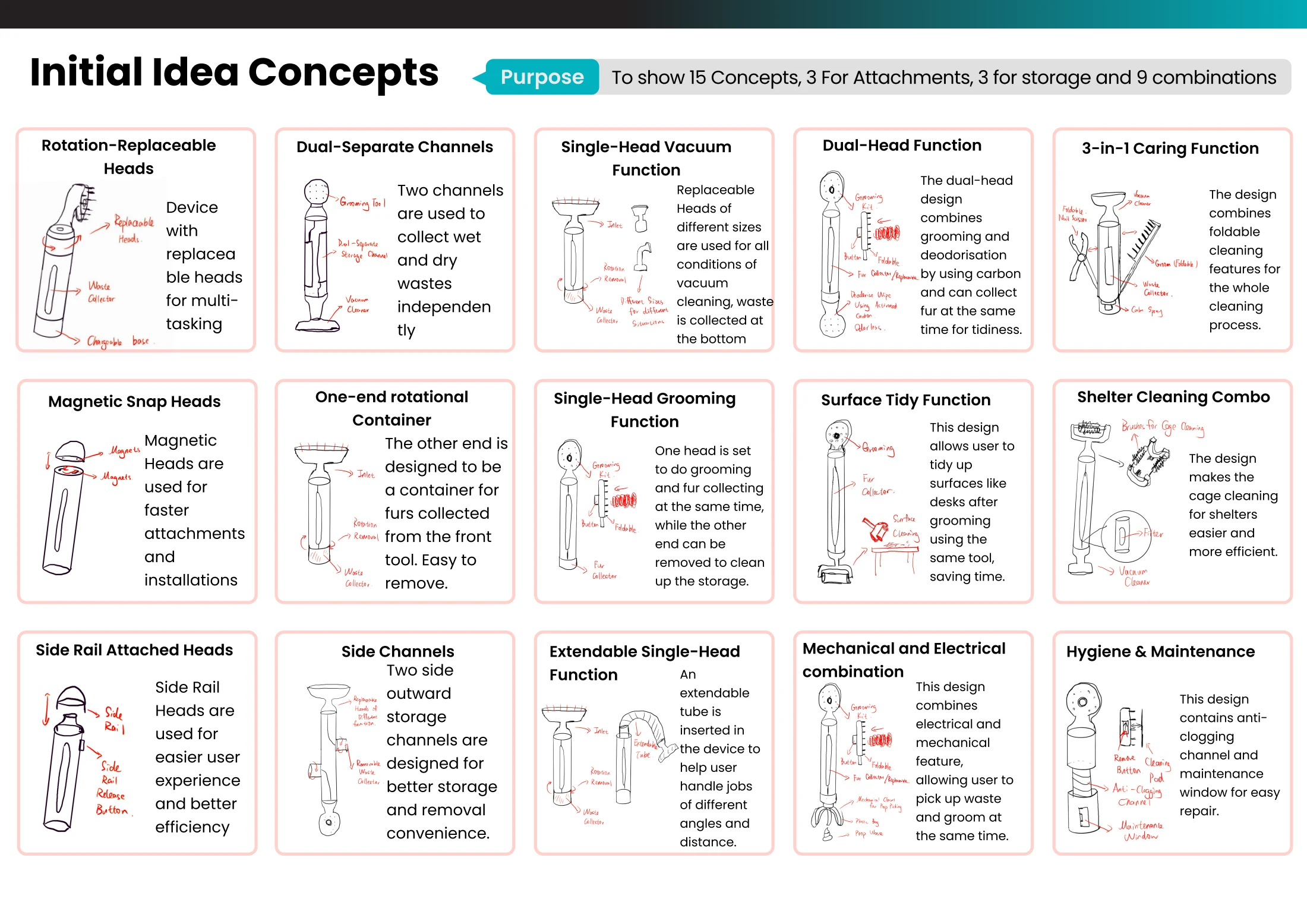
I compared a single-head vacuum, a three-in-one tool and a dual-head concept. The dual-head direction offered the strongest balance in my concept scoring: related functions, simpler handling and greater feasibility.
Combine tasks that belong together, while keeping attachments and collected fur easy to remove.
Concept evaluation and user feedback / Phase 1, p. 14. Scores reflect early design judgement.
A system designed for access
Open it.
Empty it.
Use it again.
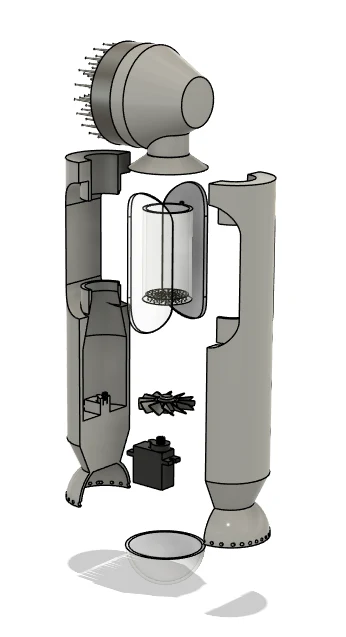
The body separates the cleaning attachment, collection chamber and motor. Detachable contact parts and a removable cartridge make maintenance visible in the product architecture.
PetEase reached concept CAD and visual development. A physical working prototype and performance validation were outside this phase.
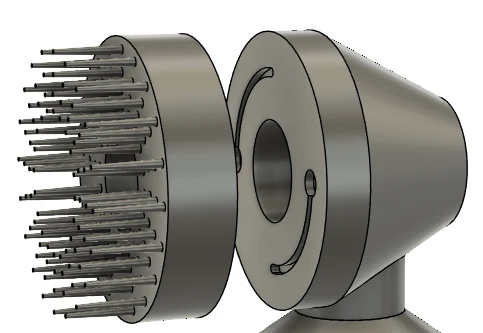
Interchangeable head
Twist. Lock. Change the task.
Locating pins follow curved slots to secure each attachment. The connection aligns the head with the airflow path, allowing the same handle to support grooming and surface-cleaning heads.
Design intent / Stable coupling with fewer separate tools
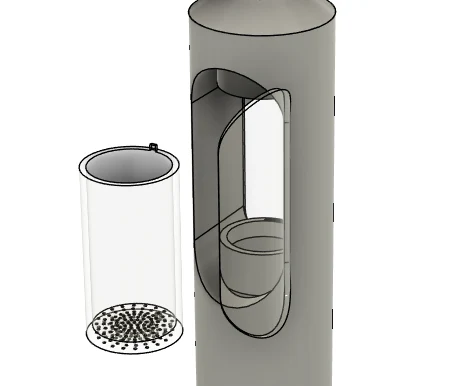
Fur collection
Keep the cleaning tool clean.
A removable cartridge collects loose fur above the fan and motor. A filter separates the collected hair from the mechanism, while the side opening makes emptying the chamber part of the routine.
Design intent / Accessible removal and cleaning
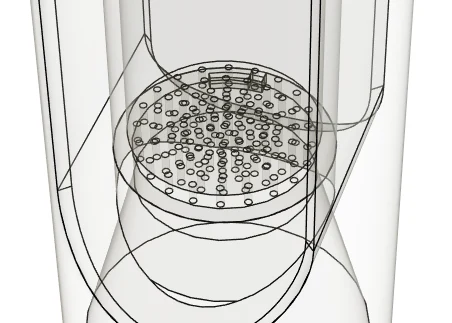
Passive filter
Give the second end a purpose.
The lower end contains a perforated activated-carbon compartment for passive odour reduction. It was conceived as a secondary function without adding another fan to the handheld body.
Concept proposal / Odour performance was not tested
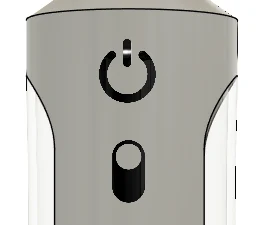
Simple controls
Make the next action obvious.
A dedicated power button and a low/high fan-speed switch keep the main interactions direct. A small OLED display was proposed for battery level and operating mode.
Concept proposal / Interface and circuit layout
03 / The team’s selection
A different concept.
A shared next step.
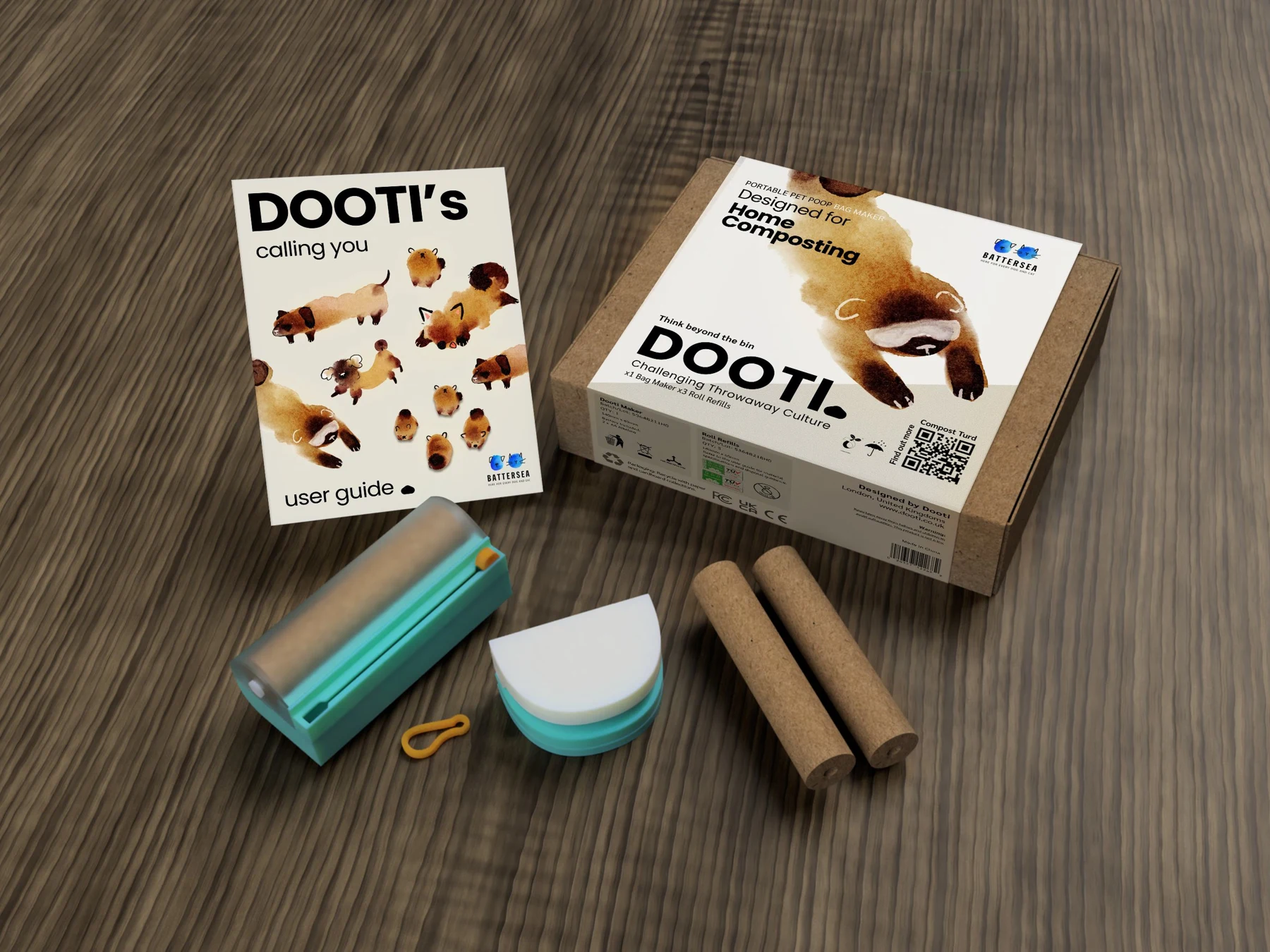
PetEase was my individual response to the brief. For the group build, we selected Preme’s RePooPress concept, which became Dooti after we reconsidered the heating area and battery demand.
PetEase
Modular cleaning and grooming
Concluded at concept CADRePooPress
Home paper-bag heat press
Initial concept by PremeDooti
Portable roll-fed bag maker
Team 14 working prototypeHeating a large sheet was poorly suited to a battery-powered device. The team moved to a narrow sealing line and an on-demand roll system, with a separate carrying pouch.
04 / Selected team project
Dooti.
A small device.
A longer view of waste.
Dooti brings material dispensing, sealing and cutting into a portable bag maker. A reusable pouch extends the design beyond pickup to the often-overlooked experience of carrying waste.
Pull
Choose a length from the refill roll. The transparent cover reveals how much material remains.
Seal
A timed heating cycle seals the inner cellulose film. The paper layer remains a separate pickup sheet.
Cut
A guided sliding blade separates the length. The team refined the slot and pull direction through prototypes.
Carry
A reusable collapsible pouch completes the proposed system for carrying the filled bag home.
My contribution / CAD + electronics
Make the idea
work inside the shell.
As the team’s CIO, I developed appearance and functional CAD, worked on circuit design and power calculations, and helped build and test the electronics.
I also supported component arrangement, soldering, assembly and integration, alongside the team’s feedback collection and final prototype testing.
Individual contribution recorded in the final report, PDF p. 44. CAD, electronics and assembly were collaborative activities.
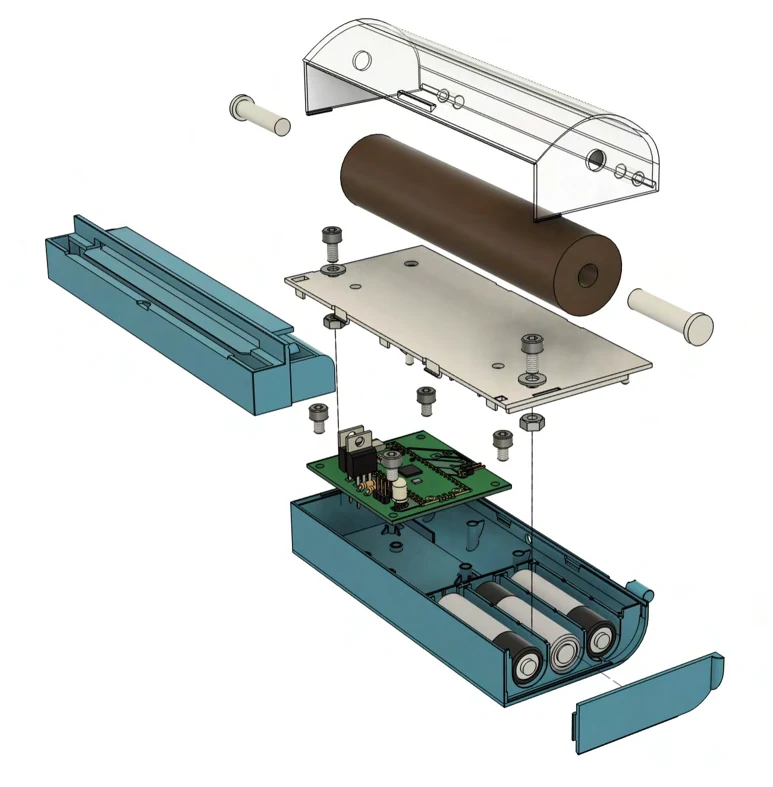
From bench to enclosure
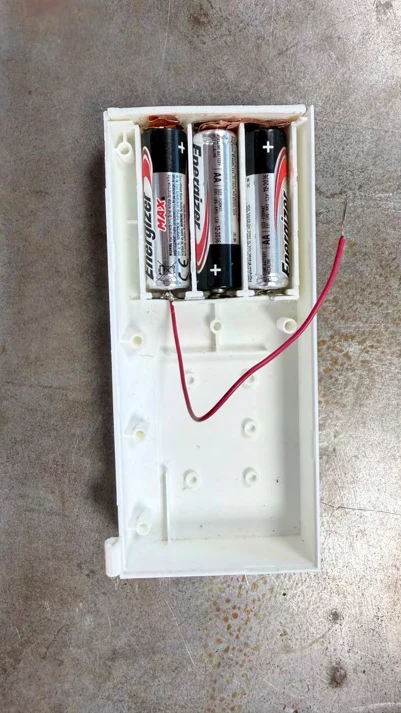
Resolve the connections.
Then make them fit.
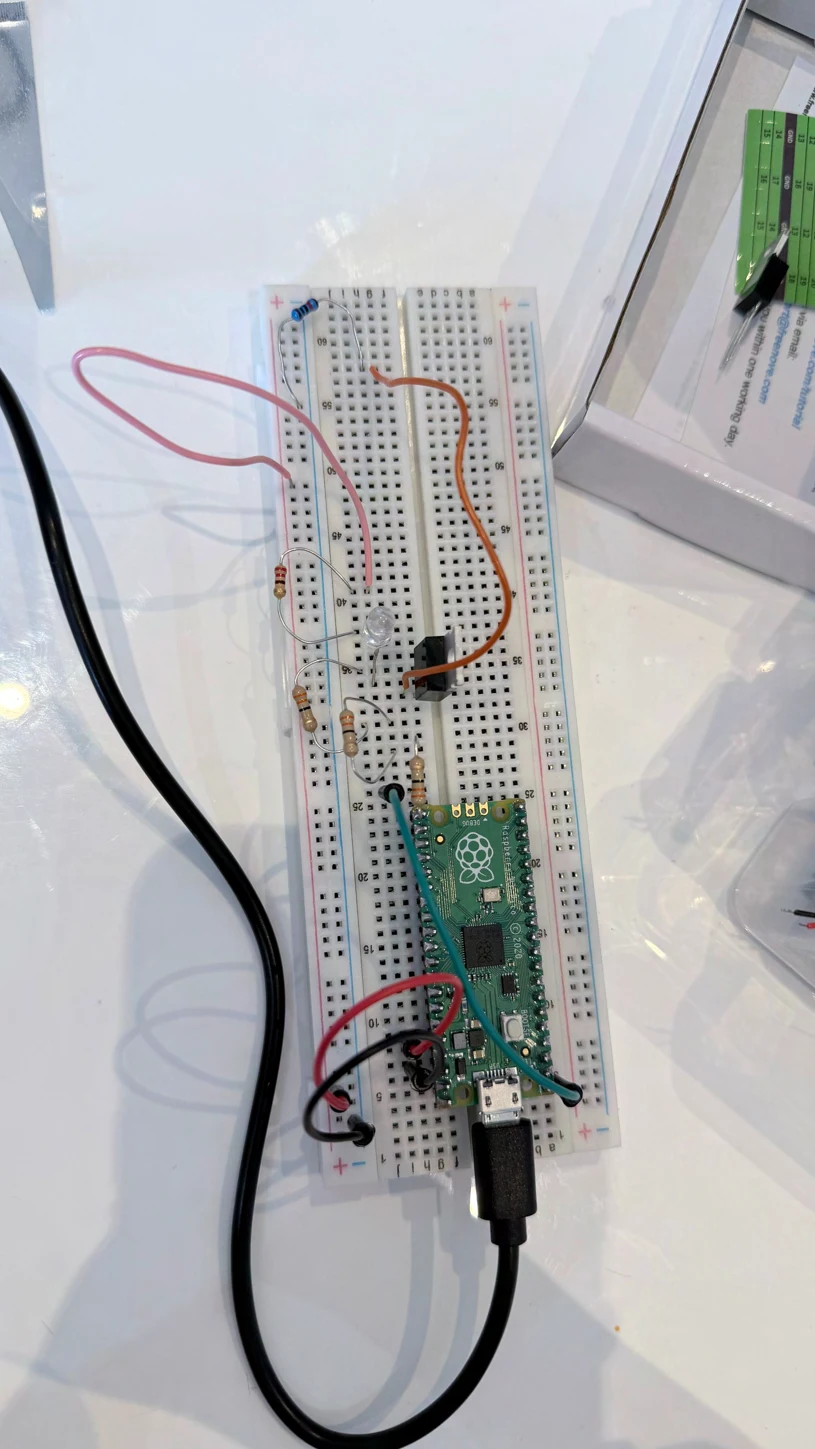
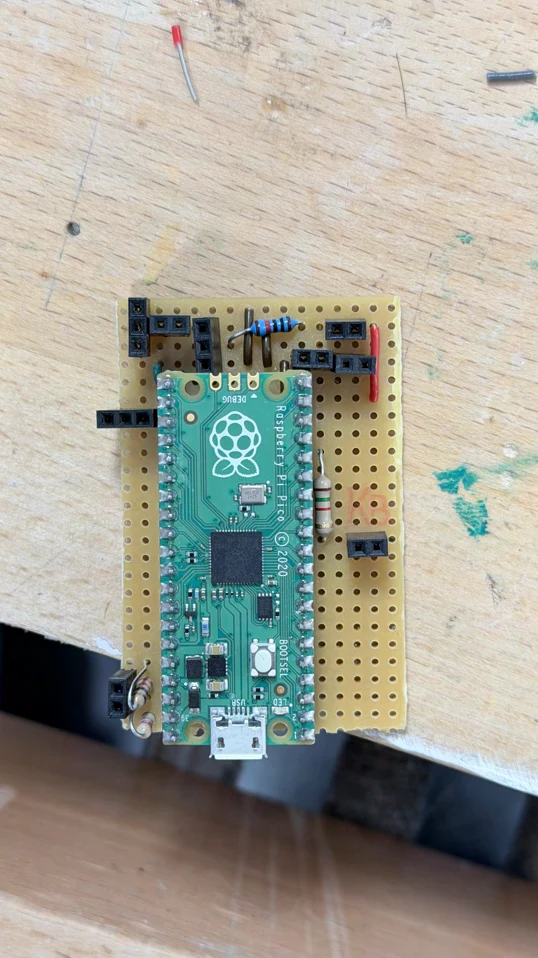
Switch inputs, thermistor feedback and status indication.
Timed heating of the inner film instead of continuous heating.
A temperature fault stops heating and requires a reset.
Team prototype development / Portfolio pp. 5, 7 and report PDF pp. 29–32. Values describe the reported control design. A custom PCB was proposed as a further development step.
Prototype → Observe → Refine
A convincing render
still needs awkward tests.
Follow the natural pull.
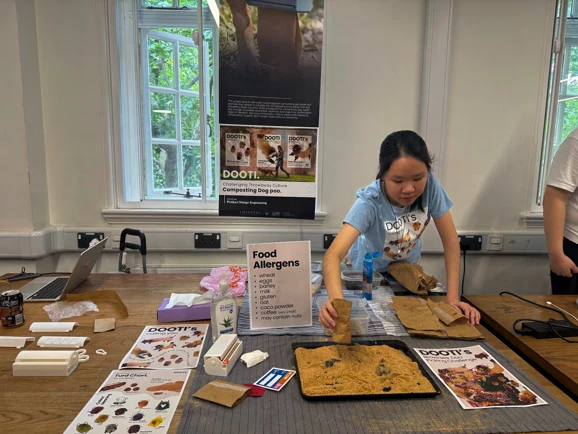
Visitors tended to pull material downwards. The team compared cover options and pull directions while refining the refill path.
Separate the material roles.
Artificial-waste trials exposed awkward transfer into the bag. Paper became the pickup sheet, with cellulose film providing containment.
Give the mechanism room.
Iterations addressed cover release, blade guidance, PCB positioning, wiring clearance and accessible assembly.
05 / Outcome & reflection
Design the routine.
Prove the details.
PetEase taught me to connect modular architecture to everyday maintenance. Dooti added the harder task of turning a shared concept into an integrated prototype under real power, space and time constraints.
Two distinct outcomes.
My PetEase concept reached sketches, design evaluation and detailed CAD. The team’s Dooti reached an integrated pull–seal–cut prototype, a pouch, packaging and exhibition testing.
Test the whole experience.
Bag size, wet-waste handling, seal consistency, pouch cleaning and odour containment need broader trials. Accelerated material exposure did not establish full compostability or a validated disposal system.
Test feasibility earlier.
The late shift away from a large heating area reduced prototyping time. I would bring power demand, component fit and a clear selection deadline into the first concept comparison.
Project credits
PetEase: individual concept by Yuxuan Zhou. Dooti: Team 14 — Yuxuan (CIO), Muk (CTO), Preme (CCO), Cici (COO). Preme originated RePooPress and led brand development; the final product, testing and presentation were a team effort.